Choosing the Right Embellishment: Style & Fabric Guide
Choosing the right embellishment is the first phrase the reader should see — because it is the single most important decision that turns fabric into feeling. Whether you are designing a bridal masterpiece, a couture statement, or a wardrobe-friendly ready-to-wear piece, choosing the right embellishment at the very start shapes every other choice: silhouette, weight, movement, and the story the garment will tell.
How to Use This Guide:
This is a style + fabric matching guide designed for designers, brides, stylists, and all fashion-loving people. We will take you through fabric families, suggested techniques, visual and tactile indicators, and care notes so you can pick the perfect embellishment every time.
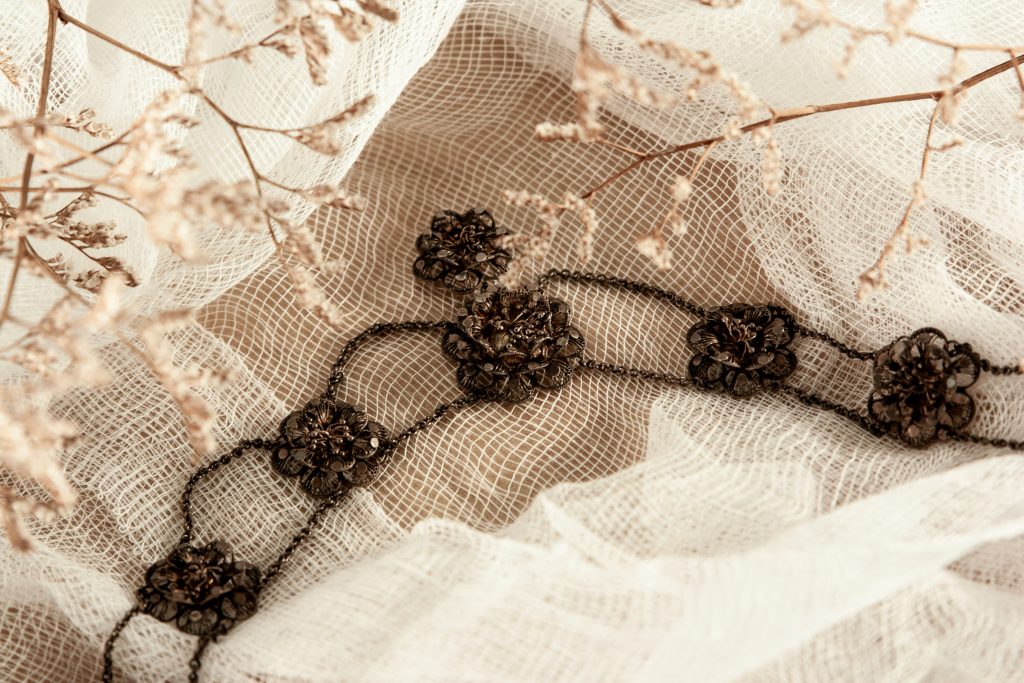
Image Credit: Unsplash – Laårk Boshoff
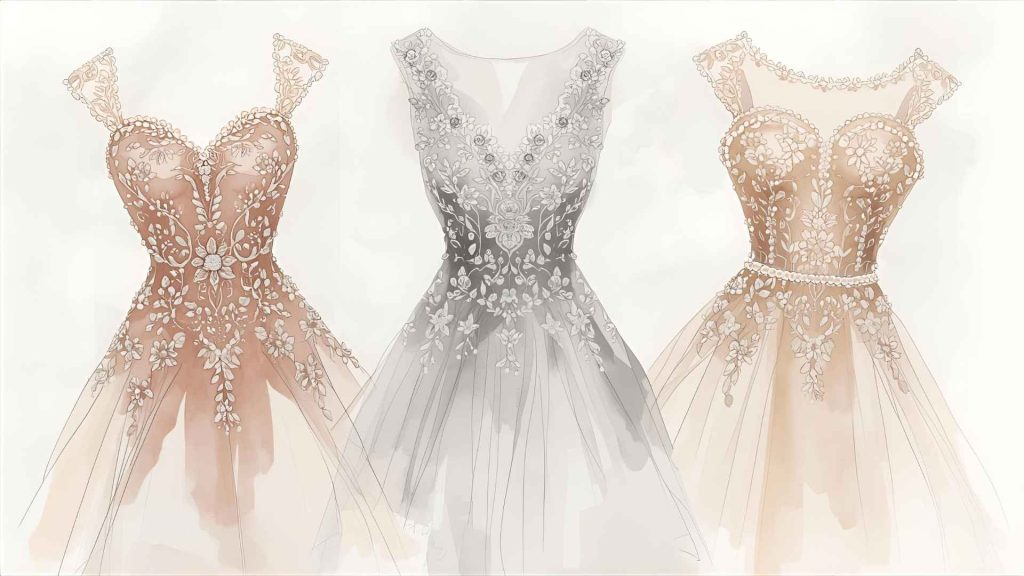
Bridal Softness, Romance, and Timeless Detail
Selecting the appropriate embellishment for the bride starts with mood. Brides tend to desire romance, comfort, and an heirloom feel.
- For silk satin, select pearl embroidery, fine thread-work, or small sequin details. These embellishments maintain the shine and allow the silk to drape. The correct embellishment in this case is subtlety.
- For net or tulle, use appliquéing flowers, scattered crystals, or dainty lace overlays. Since these fabrics are transparent, selecting the correct embellishment involves considering placement—close to the bodice or scattered over a skirt where light can dance across it.
- For lace, tiny bead highlights or metallic threads can create depth without overwhelming the design. In selecting the proper embellishment with lace, enhance the existing motif instead of hiding it.
- For velvet, richer weight of work like Cardozo, embroidered patterns, and thick bead work is read as regal. In velvet, the right ornament often equals richness.
Bridal items are emotional items. Brides recall how a dress glimmered, how a bead sat between their fingers – so when selecting the proper embellishment for bridal, focus on comfort and durability. Sample weight on fabric scraps, and always inspect how seams take the added stress.
Couture: Drama, Texture, and Visual Storytelling
Couture is where art and technique meet. Choosing the right embellishment for couture invites experimentation but must still respect the fabric’s behaviour.
- Organza and organza-structured layers respond beautifully to 3D appliqués, sculpted petals, and feather work. If you are choosing the right embellishment for a sculptural gown, think about how the detail will read from the runway and up close.
- Brocade and jacquard are already dense with visuals. When selecting the proper embellishment in these cases, opt for selective metallic thread or bead accents to add to the weave without competing against it.
- Silk crêpe and chiffon are best treated with subtle crystal trails, hand-sewn sequins, and elegant bead lines. In these fabrics, the right embellishment is about disciplined sparkle—just enough to indicate luxury, but not enough to load down the fabric.
- Thicker material and leather can support studs, heavy metalwork, and aggressive patchwork. In selecting the perfect embellishment for edgier couture, pay attention to comfort and how the piece flows.
Couture is your story. When selecting the proper embellishment for couture, coordinate technique with narrative: soft hand-stitched pearls for nostalgia, angular geometrics for futurism, and mixed-media for contrast.
Ready-to-Wear: Durability, Comfort, and Scalable Detail
Ready-to-wear needs to be adored in the closet and make it through the laundry. Selecting the correct embellishment for ready-to-wear is practical: select methods that will last, hold their shape, and stay budget-friendly at volume.
- Cotton and linen look stunning with thread embroidery, tiny patch appliquéing, and block printing. When selecting the correct embellishment for everyday clothes, prefer low-profile details that will not snag or stiffen the fabric.
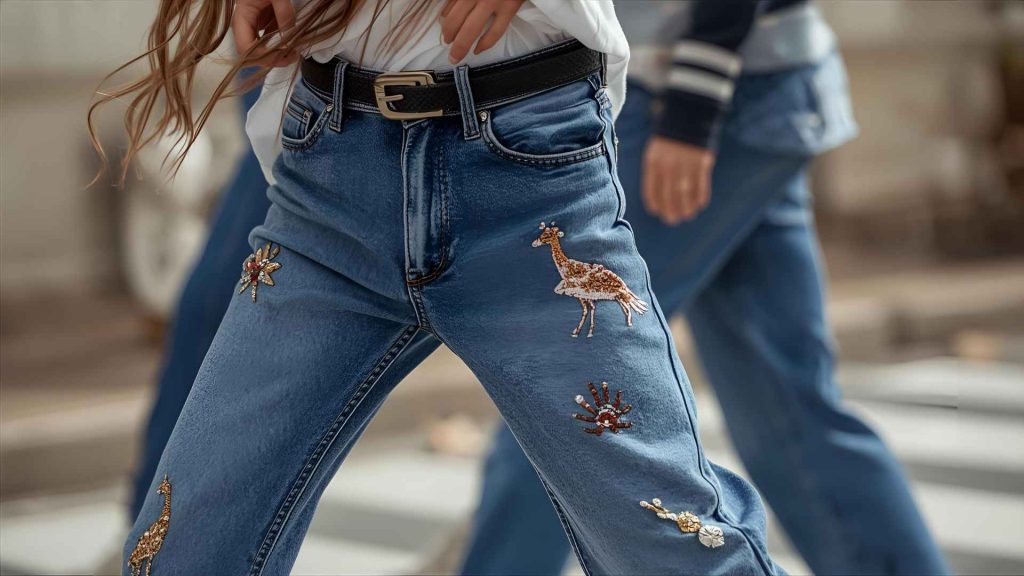
- Denim and patchwork, rivets, and sequined trims are suitable for statement clothing. For denim, selecting the proper embellishment can be bold—this material can support structure.
- Jerseys and knitwear call for stretch-friendly options such as heat-set crystals, stretch stitch embroidery, or knitted-in designs. When selecting the correct embellishment for stretch fabrics, stay away from heavy beads that will pucker the knit.
- Polyesters and blends accept foil prints, laser-cut designs, and bonded appliqués. When selecting the correct embellishment for blended fabrics, test wash and wear always.
Ready-to-wear embellishment options must take production realities—time, expense, and customer care—into consideration. Selecting the correct embellishment for ready-to-wear is as much about everyday use as it is about good looks.
Fabric + Technique : A Quick Reference
Use this cheat-sheet when selecting the correct embellishment on the spur of the moment:
- Sheer (tulle, net, organza): Appliquéing, light bead work, crystals, lace overlays.
- Smooth (silk, satin, crêpe): Pearl work, fine sequins, and tonal thread work.
- Textured (brocade, jacquard): Metallic thread highlights, subtle beading.
- Heavy (velvet, denim, leather): Dense bead work, Cardozo, studs, patches.
- Stretch (knit, jersey): Heat-applied elements, stretch embroidery, and integrated trims.
This handy guide comes in handy while selecting the proper embellishment while mood-boarding, selecting swatches, or meeting the client.
Visual & Tactile Cues to Guide Your Choice
You do not always require a rule book-leave it to your eyes and hands. In selecting the appropriate embellishment, ask:
- Does the fabric drape or retain structure?
- How does light behave against the surface?
- Will the wearer be sitting, dancing, or in general movement a lot?
- What emotional message should the garment express?
If a fabric is fluid, the correct embellishment is about keeping weight to a minimum and selecting techniques that move. If a fabric is structured, the correct embellishment offers the key to dramatic texture and 3D effect.
The Emotional Side of Embellishment:
There is a personal, human reason why selecting the correct embellishment is so important. Embellishment is memory creation: the small pearl seed sewn into a bride’s bodice by a grandmother, the hand-embroidered motifs that tell of a designer’s youth, the mended patches and the beads added to give a frayed jacket new life. These things bear stories across decades. When a bride gets into her wedding dress and is faced with the exact placement of lace and beading, she does not so much recall the cut—she recalls who assisted her, where she giggled, and the labour that went into every carefully hand-finished element. When a client purchases a ready-to-wear garment with a well-placed hand-embroidered patch, it is no longer just a piece of fabric—it is an everyday friend. For artisans and designers, selecting the appropriate embellishment is an aesthetic as well as an ethical decision. It honours the hands that produced the fabric, respects cultural processes, and prioritizes endurance over obsolescence. That emotional connection—between maker, fabric, and wearer—is what makes a garment into something to be cherished, shared, and remembered.
Practical Steps to Choose with Confidence
- Start with the fabric sample. Place the intended embellishment beside it and test how the two interact. If you are choosing the right embellishment, this is non-negotiable.
- Make a sample mock-up. Hand sew, glue, or heat-bond a small sample. Seeing is believing when choosing the right embellishment.
- Assess weight and care. Will the detail change how the garment must be laundered? If you are choosing the right embellishment for bridal, consider dry-cleaning needs.
- Take placement and ergonomics into consideration. Steer clear of high-frequency zones for fine work. In selecting the proper embellishment, consider pockets, seams, and body motion.
- Use artisan knowledge. Seasoned embroiderers and embellishes will inform you of what a fabric will and will not tolerate. Consult them when selecting the right embellishment.
Care & Maintenance: Keep the work beautiful
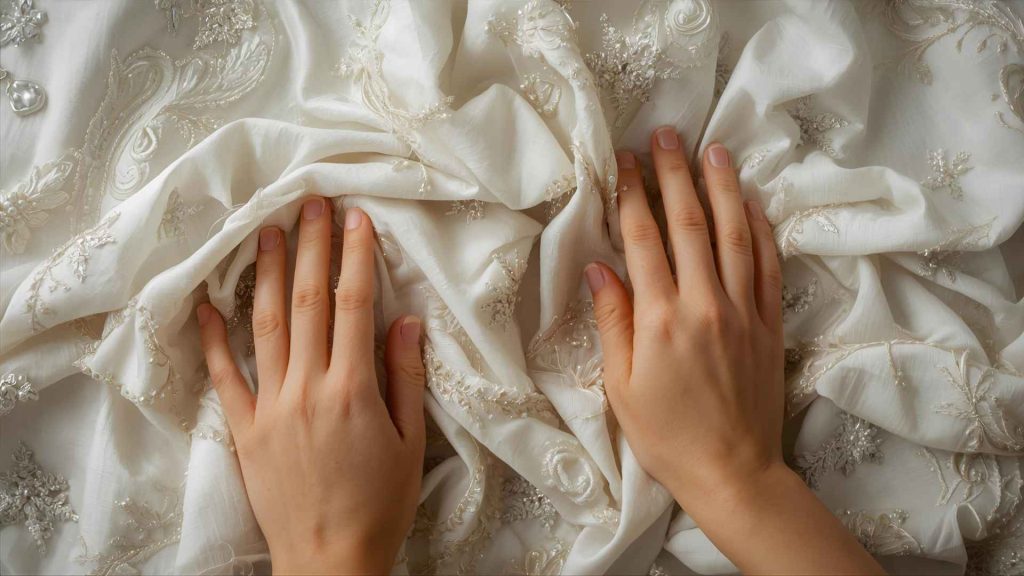
Do not stop stitching. Educate the wearer on how to take care of it.
- Hand-wash or dry-clean? Be clear. If you have spent time choosing the right embellishment, make sure its care instructions protect it.
- Storage: Use padded hangers and breathable covers for delicate pieces. If you are choosing the right embellishment for bridal, suggest preservation boxes.
- Repairs: Leave a seam allowance or spare motifs to make future repairs easier. Prepare the wearer when choosing the right embellishment so that tiny beads may loosen over time.
Good care will prolong the life of an item and respects the effort that was expended selecting the appropriate decoration.
Sustainability & Value: Why Thoughtful Choices Matter:
When designers concentrate on sustainability, technique and longevity, they are not only creating beauty—they’re avoiding waste. Selecting the appropriate embellishment frequently involves selecting separability, timelessness, and upcycling potential. A gown with strategically placed handwork is likely to be altered, restyled, or treasured—an effect that is good for both the wearer and the planet.
Final Checklist: Before You Commit
- Have you tested on a swatch?
- Does the embellishment complement the fabric’s drape?
- The weight is suitable for the garment?
- The piece is maintainable by the wearer?
- Does the detail enhance the emotional resonance you seek to create?
If your response is “yes,” then you have succeeded in making the correct choice.
Closing Thoughts:
Selecting the proper embellishment is an act of empathy: empathy towards the fabric, towards the craftsman, and towards the wearer of the garment. It combines technical thought with emotional awareness. Whether you are creating a bridal heirloom, a runway showstopper, or a treasured everyday item, the perfect embellishment transforms fabric into story. Use this guide as a friend: experiment frequently, place comfort and longevity at the forefront, and always allow the fabric to guide the way. And when you do, you will discover that selecting the optimal embellishment is less of an issue and more of an experience.
Transform your fabrics with expert hand embellishment — visit our website to get started.